The 20th Century in 900 Seconds
An immersive video installation to navigate between past, present and future, created for M9 – Museum of the 20th Century.
A century still close to us.
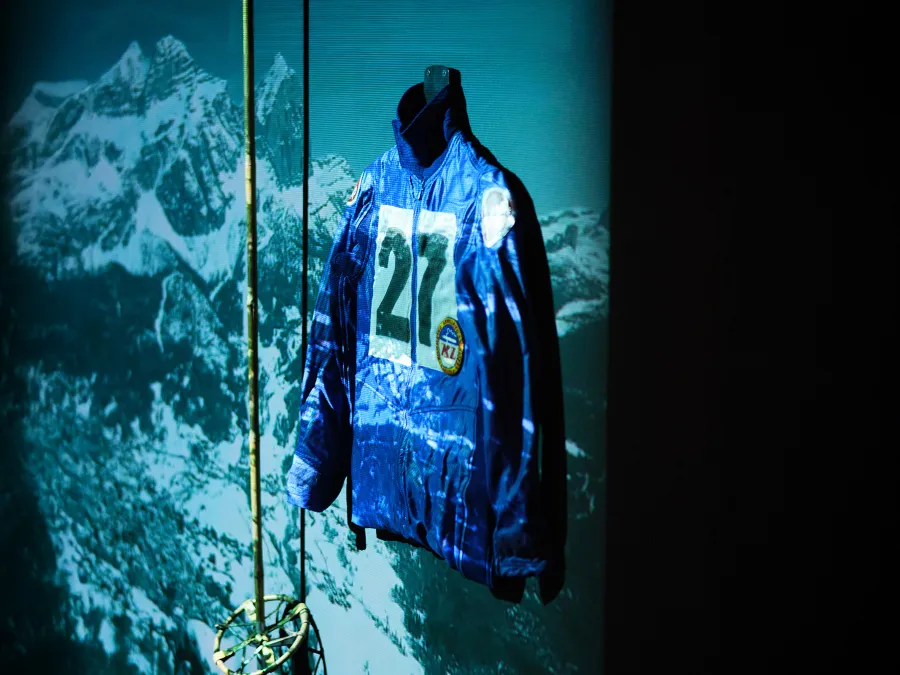
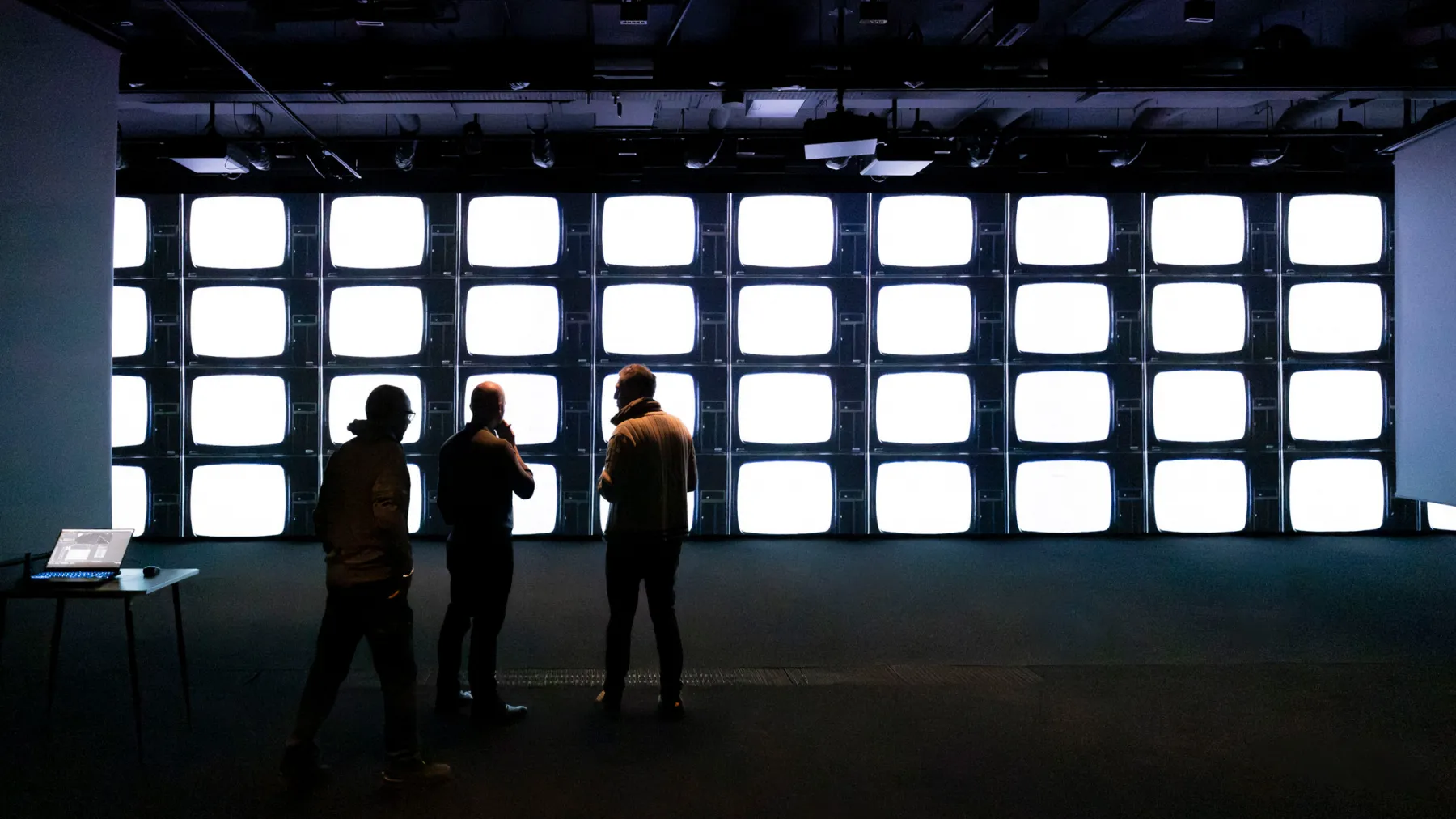
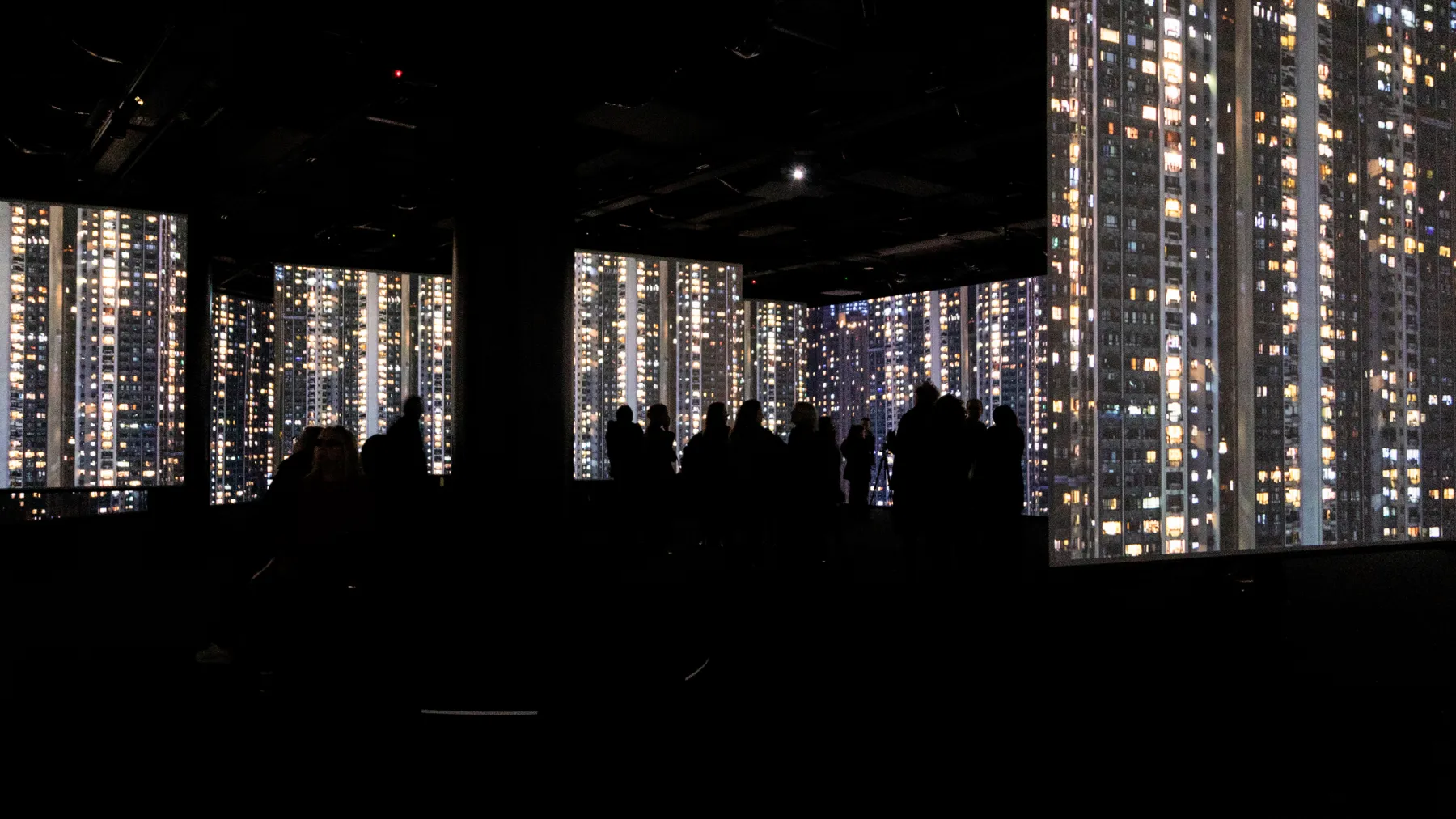
For the anniversary of the Museo del '900, we created “Novecento,” an immersive site-specific video designed specifically for the new Orizzonti room. The film, made up of over 1900 video fragments, offers a concise, dense narrative meant to introduce visitors to the century that transformed the world.
A modular visual environment
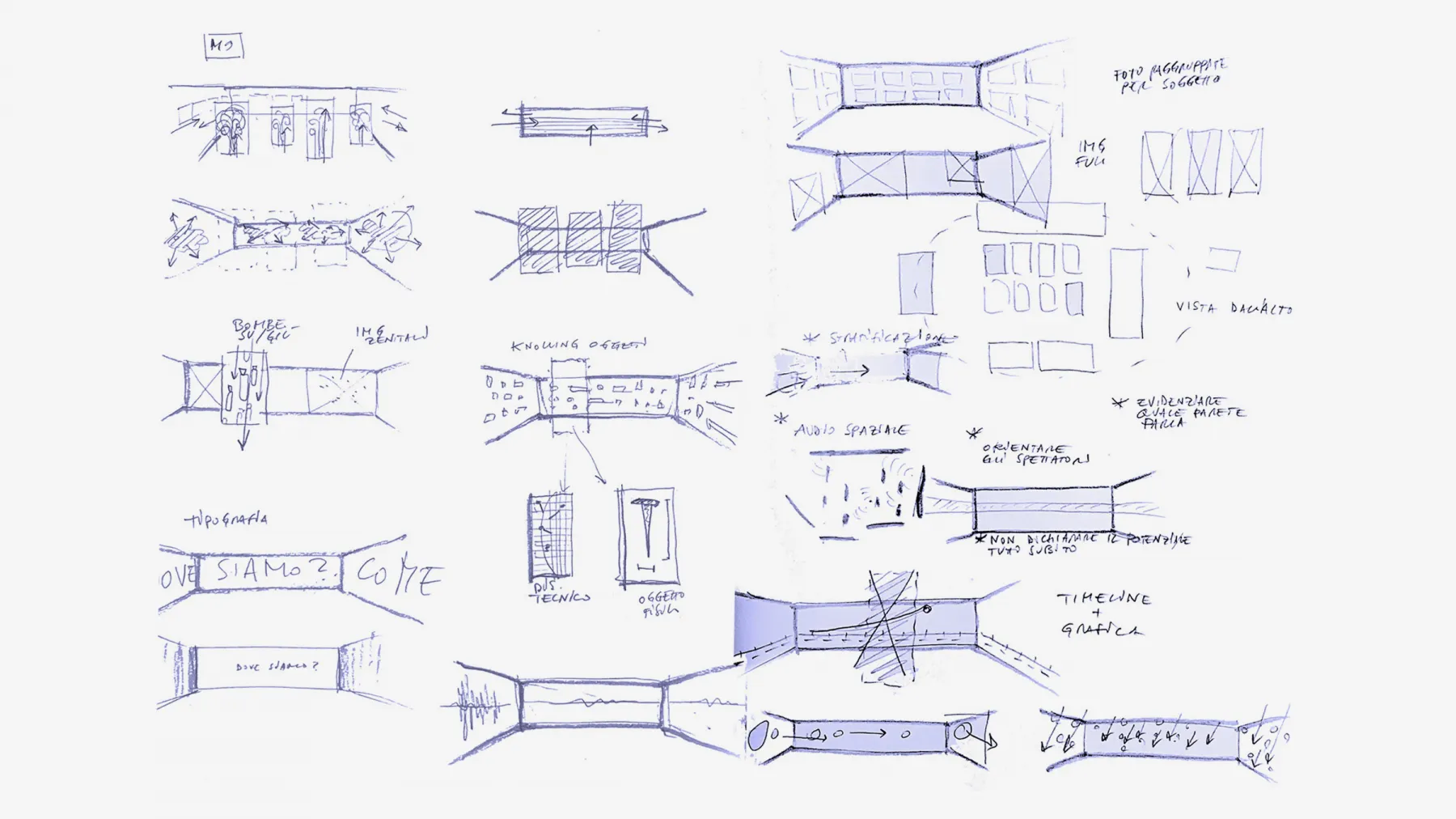
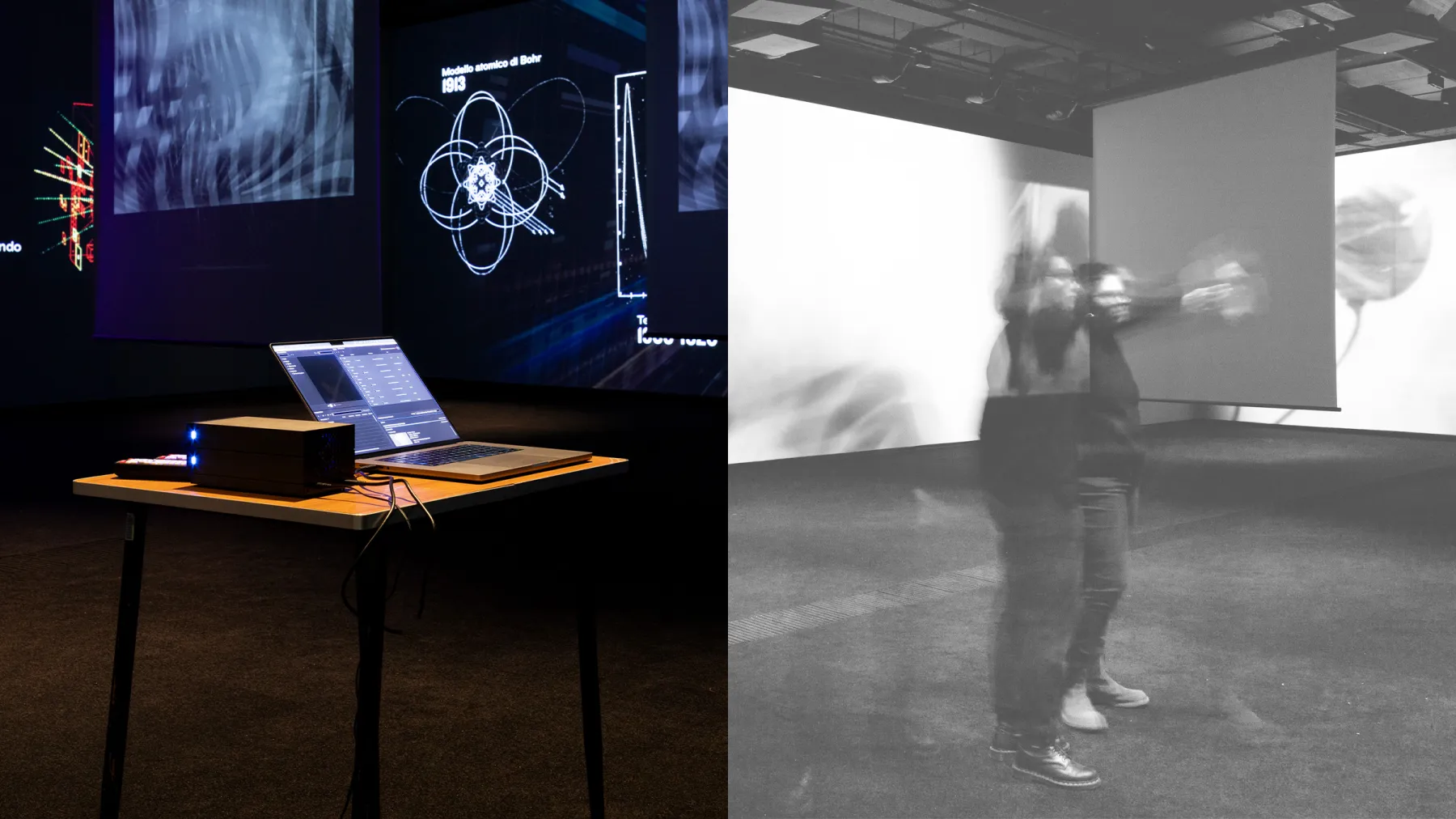
The new Sala Orizzonti is an immersive, flexible space designed to host contemporary visual languages. Panoramic perimeter projections combine with central motorised projection screens that appear and disappear as needed. It's possible to activate only the perimeter, only the projection screens, or synchronize everything for a full 360° experience.
The image becomes space. Space becomes image.
Designed in collaboration with Salottobuono, the room hosts videos, installations, temporary exhibitions and events. Large-scale imagery expands the limits of the space, while sound carries the viewer into another time.
400 sqm
room surface area
300 sqm
projected surfaces
8
mobile square screens
5
perimeter projections
18 m
longest screen
3 x 3 m
size of the square screens
29072 px
the length of the compositions in pixels
360°
the audio and video effect
An entire century in a single video?
The 20th century was the century of acceleration: in transport, technology, communication, rights — but also in conflict. In just a few decades, we changed our skin, our roles and our horizons. Our challenge was to condense all of this into a coherent, engaging visual flow, able to convey the energy and contradictions of the era. The help of M9's curators was essential in navigating a century dominated by the technical reproduction of the image — and by the industry that gave it form and reach.
A bold graphic language that doesn't explain — it imposes.
In Novecento the graphics don't whisper: they shout. We chose oversized, juxtaposed, raw text to mimic the energy of protest posters, militant flyers, and the rebellious typography of the '70s. Graphics that don't ask for attention — they demand it. A visual homage to political communication, to signs made to be seen from afar, to typefaces that seek impact rather than elegance.
Numbers measured against the body.
The infographics, too, are neither decoration nor caption: they are a bodily experience, a tangible measure of the immeasurable. The visualization of the most significant data envelops the visitor in a visual synthesis with strong emotional impact. When numbers are too large to grasp, another scale is needed: that of the human body. With this in mind, we turned the infographics into an environment: the figures recounting the great wars, migrations, urban densities or the Anthropocene no longer live only on a screen but surround the viewer, forcing a kind of 'close encounter.' Because behind every number there is always a life. And behind every scale, an ethical choice.
An editing style that becomes language.
Repetition, rhythm, asynchrony — an editing style that recalls both the mechanics of technical reproduction and the poetics of the avant-garde, becoming choreography. Loops and micro-shifts were used as visual quotations of technical reproduction, but also as homages to the subtle gestures of the historical avant-gardes. In the editing, we didn't just tell a story — we sought to question the audience's visual memory, challenging it with broken rhythms, sudden echoes, and temporal dissonances.
Two voices for a century at odds with itself
To tell the story of a century so full of contradictions, more than one voice was needed. We chose a point and counterpoint: two tones, two perspectives, two ways of reading the same events. A two-voice narration — never neutral — that brings out the tensions between good and evil, light and dark, progress and trauma. A structure that becomes both a stylistic and political choice: not a single commentary, but a dialogue, at times tight, at times dissonant, running through the images and the eras.
Client: M9.
Film: Novecento. The Best and Worst of Centuries. Dedicated to the Future.
Production: Studio Visuale
Direction: Francesco Pia
Writing and curation: Livio Karrer and Michelangela Di Giacomo
Copywriting: Roberto Pizzato
Editing: Alice Musi and Francesco Pia
Visual and motion design: Marta Pulin
Graphic design: Daniele Balcon
Sound design and mixing: Enrico Lenarduzzi
Voice over: Valentina Framarin
Recording studio: The Basement Federico Pelle
Music tracks
Gigliola Cinguetti, Non ho l'età (Per amarti) - 1964
Snap, The Power - 1990
Mina, Parole - 1972
Thanks to the following archives for the images
E-geos, Istituto Luce, Google, Nasa, Adi Design Museum, Rai Teche, Archivio Fotogramma, Archivio M9
Contributing archives:
Gettyimages, Stocksy, Shutterstock, Filmsupply, Artgrid.
The following contributed to the M9 immersive room project
Salottobuono
Matteo Ghidoni and Marzia Maria Minelli
Studio Visuale
Creative direction and project lead Francesco Pia
Art direction and project management Daniele Balcon
Project team: Corrado Loschi, Leonardo Gava, Alberto Vittadello (Cibo), Marta Pulin, Alice Musi
Multimedia supply
Murer - cantieri audiovisivi
M9
Michele Bugliesi, Livio Karrer, Claudia Biotto, Michelangela Di Giacomo, Antonio Rigon, Luca Molinari